Curator, Samantha Friedman: I’m Samantha Friedman. I’m Associate Curator in the Department of Drawings and Prints at The Museum of Modern Art.
In these early works, O’Keeffe was really among a generation of artists who were thinking about abstraction and looking to music as a way to get there—borrowing its rhythm, its harmony, its dissonance. O’Keeffe did play the piano and the violin, and she said that she believed that music could be translated into something for the eye.
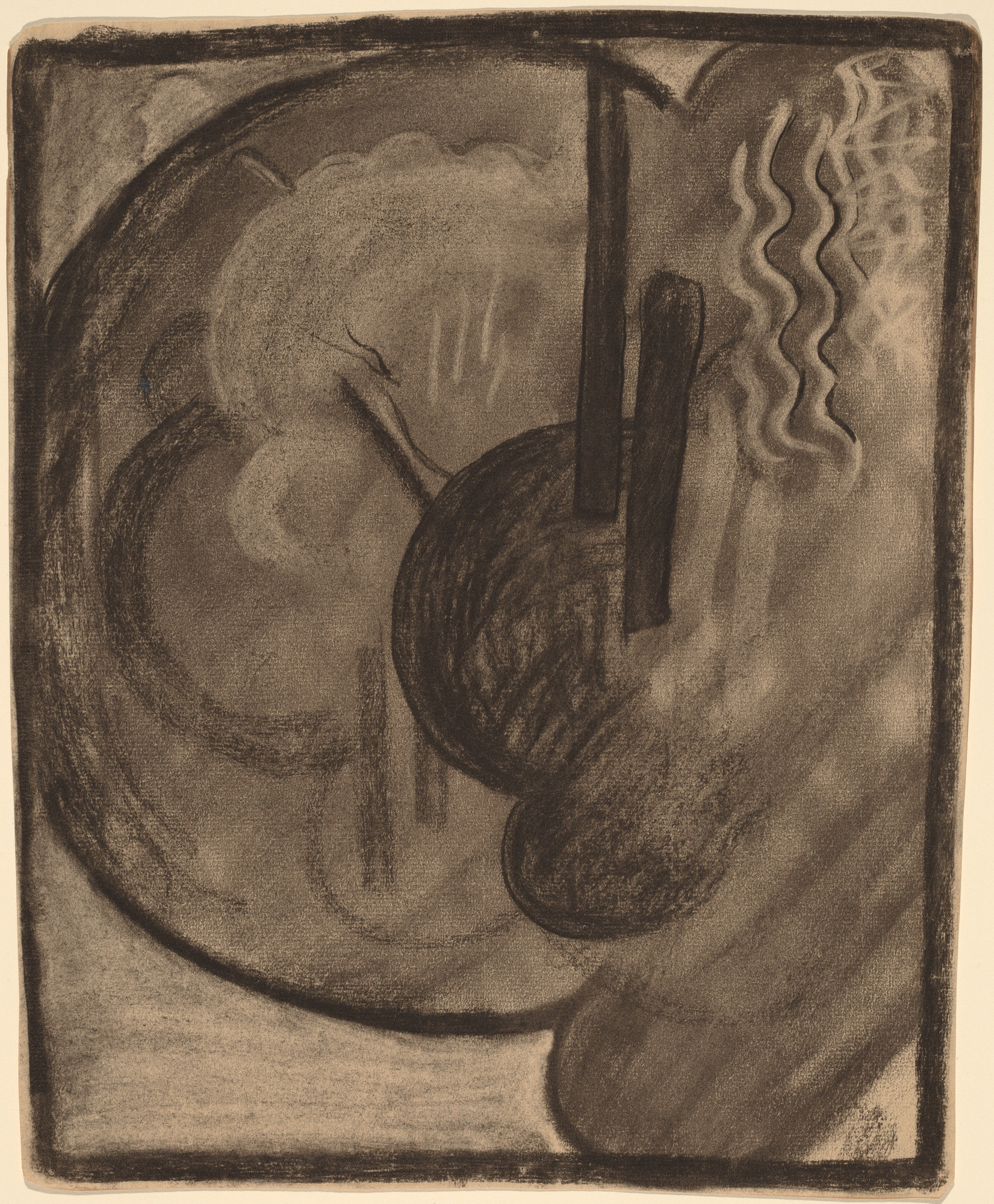
When you look at a work like No. 20 – From Music – Special, there’s such a variety of marks—dark and light forms, geometric and organic forms—you’re prompted to almost think about how these different visual forms might sound.
Curatorial Assistant, Emily Olek: I’m Emily Olek, Curatorial Assistant in the Department of Drawings and Prints.
When you’re a musician, you’re taught to visualize a note. When they want the sound to swell, you visualize this very circular motion. And in the charcoal, you have this large circular form that’s being interrupted by these smaller curves. And then off to the upper right, you see where she’s reducing and erasing which, to me, almost looks like strings, as if there’s some sort of violin or cello, and she’s just trying to embody the sound that they’re creating, the tones.