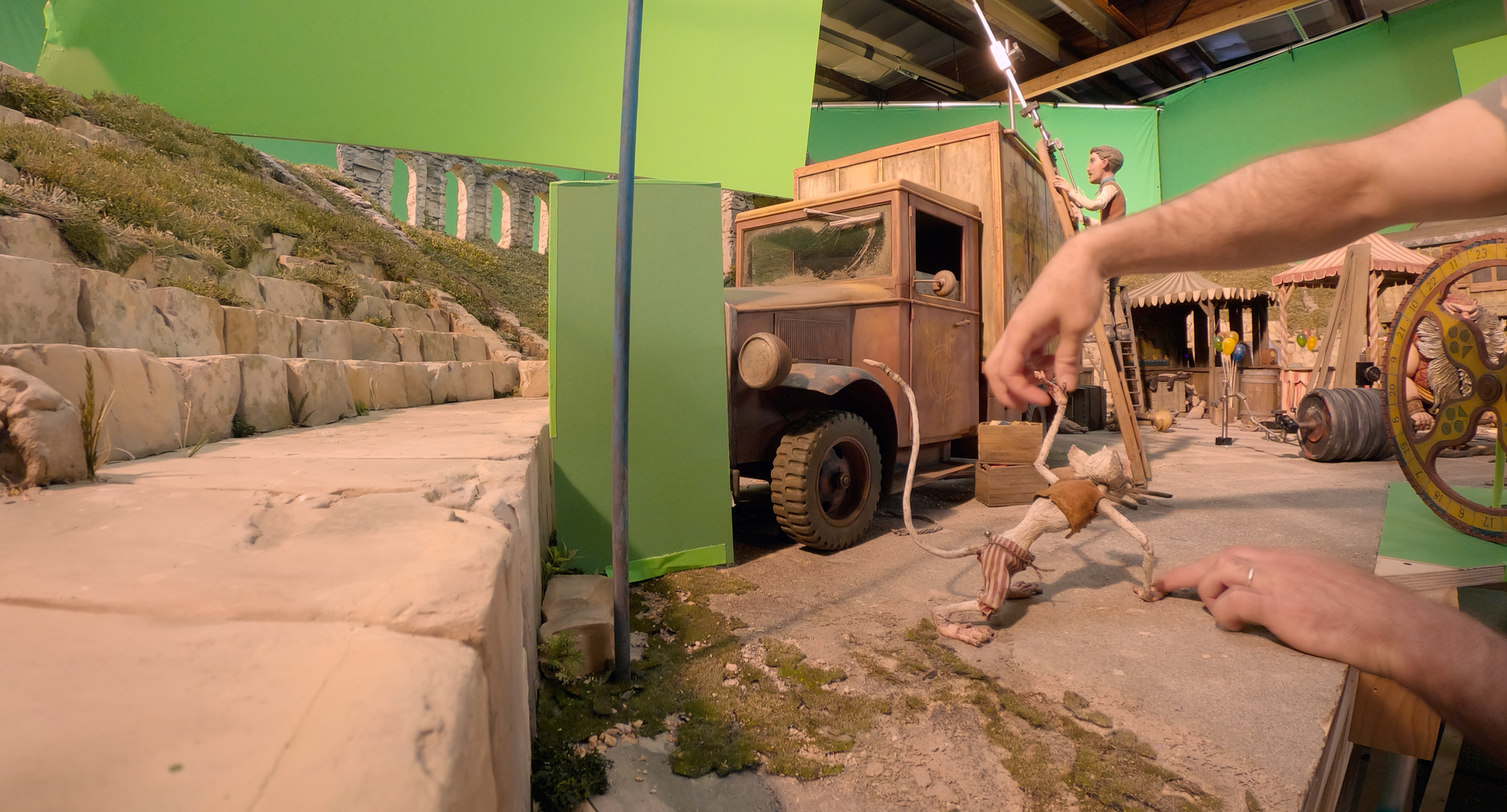
Director, Mark Gustafson: Stop motion involves taking an object or a puppet and moving it slightly and shooting a frame, moving it a little bit more, shooting another frame.
Narrator: These frames are like still photographs. When you arrange them in a sequence and play them back at a certain speed, it creates the illusion of a moving image.
Every object and character in a scene is moved and controlled by an animator.
Mark Gustafson: The animators are our actors and one of the founding principles that Guillermo and I came up with when we started this was, we’re going to give the performance back to the animators as much as possible.
Producer, Alex Bulkley: The animators were moving lights as they felt it was important for that shot or scene. They were putting all the props where they should be for that particular shot or scene.
Animation Supervisor, Brian Hansen: Most times before you do a shot as an animator, you investigate what kind of shape this shot is going to have, what kind of motion, what kind of speed, and a quick way to do that is just film yourself.
Animator, Chuck Duke: Usually, you’ll do a shot where it’s just posing. And then we’ll have a review. And we’ll go over the emotional side of it: What is this scene about and where is it in the movie?
Guillermo was really stressing the realism of the performances.
Director, Guillermo del Toro: We wanted to shoot characters listening and receiving and thinking. Characters scratching because they’re itching, sneezing, looking away when they feel afraid or ashamed or worried. Moments that are normally not shot in animation. We urged the animators to think through the puppet, to avoid pantomime, and to give us real acting.