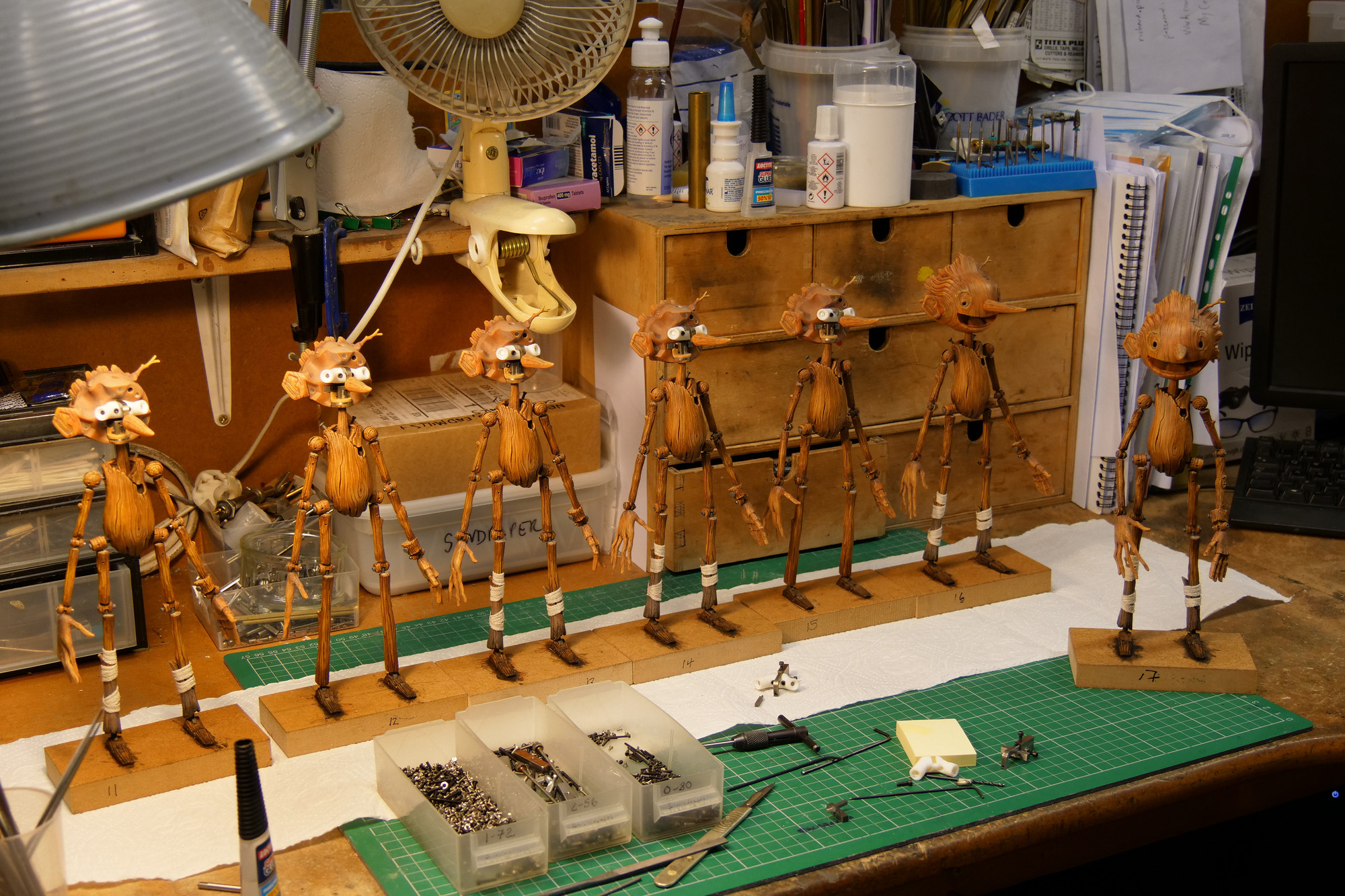
Puppet Production Manager, Jennifer Hammontree: The puppet-making department is responsible for creating all the characters you see on set.
Co-Production Designer, Curt Enderle: You have molders and casters and people building armatures and people building hair and people building costumes.
Jennifer Hammontree: These are complicated puppets. It takes lots more time than people realize. They have skeleton bodies that we build out of steel and ball-and-socket joints. And then over that we cast a layer of foam for squishiness and flexibility, and then a layer of silicone to give it a more skin-like appearance when it moves.
Puppet Maker, Peter Saunders: You create a skull for the character and then build into the skull various mechanics that will allow the face to create expressions.
Jennifer Hammontree: Tiny gears and wires and paddles. If we’re going to see the body parts at all, we have to paint those, just like a makeup artist. Costume, hair, fur, feathers.
Peter Saunders: The puppet gets tested. The animator comes back with a whole sheet of complaints and saying, “Can it do this? Can it do that?”
Jennifer Hammontree: We just really need everything to be able to be controlled by the animators. So a full puppet timeline—about six months to a year.
Puppet Creative Supervisor, Georgina Hayns: But a puppet is never finished until the last day of filming because If an animator comes to us and says, “Look for this shot, I really need this emotion. And I can’t get the brows up in the middle.” “Okay. Let’s see what we can do.”