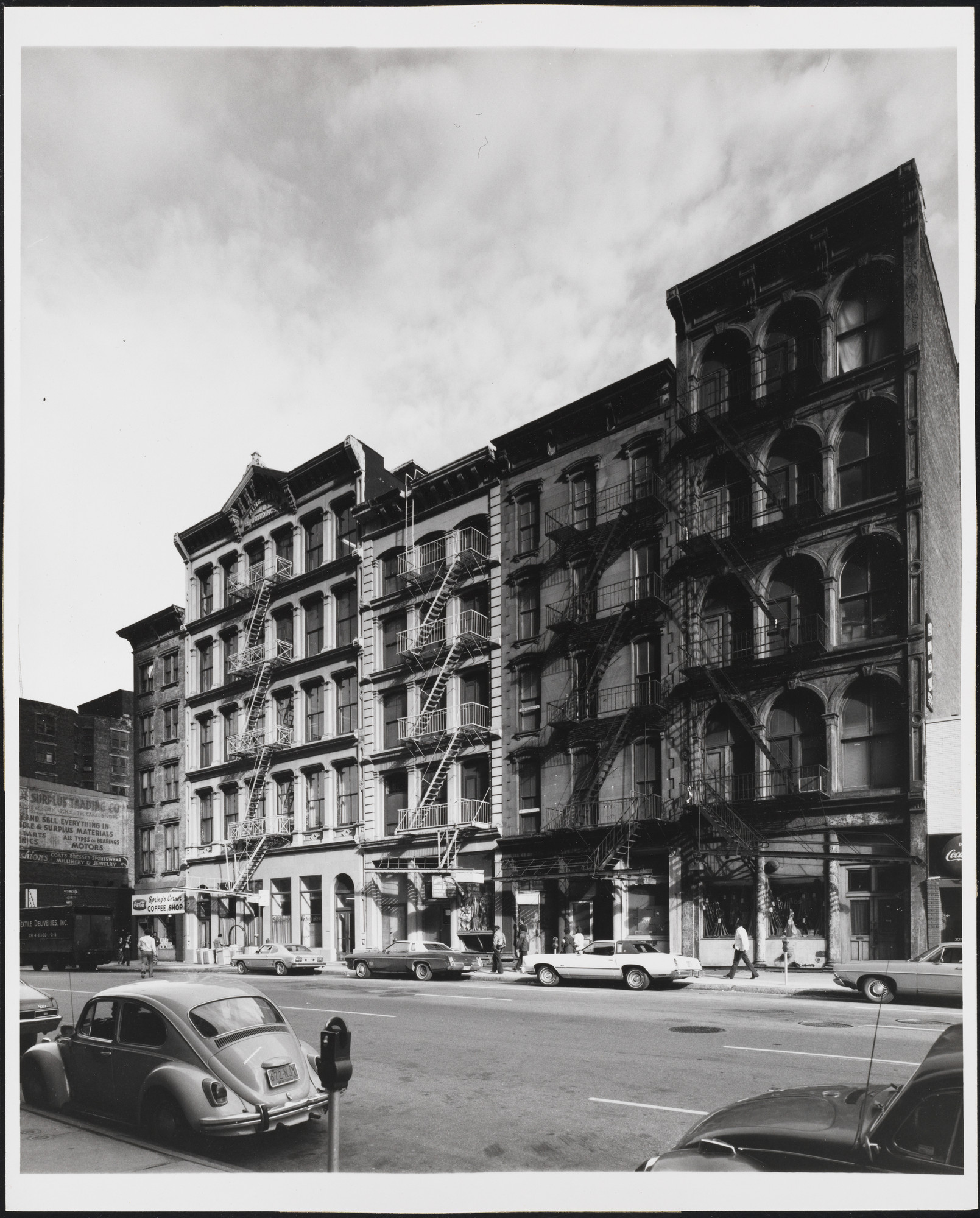
Tourmaline: We’re at 36 Lispenard Street at the corner of Church Street. It’s now a 5-story brick building, but in the 1830s and 40s, there was a three-story building at this site that was home to David Ruggles. His home was a stop on the Underground Railroad and he helped more than 600 people fleeing slavery. Ruggles was the founder and owner of the country’s first African American book store.
Mariame Kaba is an activist who has been inspired by David Ruggles.
Mariame Kaba: Well, he's my favorite. He's extraordinary in multiple ways, ahead of his time, by far, somebody who is unknown today by most people. And that's a deep, deep shame. I think about it, particularly, for young Black people. There's so much that he made possible, in terms of the way that he lived his life, for them in this current moment.
He was one of the key people who created what he called the Committee of Vigilance, which was this group of overwhelmingly Black people who were New York anti-slavery activists and he helped create it here in Manhattan in 1835. And the goal of the committee was to protect defenseless, endangered persons of color by securing their rights as far as practicable. It is those vigilance committees that basically become the institutionalized form of what we understand the Underground Railroad to be.
He was the person who took in Frederick Douglas when Frederick Douglas was scared and alone in New York City, after he had finally successfully escaped from Maryland, the Eastern shore. He had him stay at his house for several days until Anna Marie, his fiance, could come. And they married in his house on Lispenard Street.
Tourmaline: I grew up in Roxbury, which is a historically black part of Boston, where people like Audrey Lorde and Malcolm X lived and created. And I grew up next to Ruggles Square. And so It was really powerful to think about his life and his movement and the many places that he created from.
Mariame Kaba: David Ruggles coined this term “practical abolition,” which meant that Black and white abolitionists had to confront slave owners and their allies, even in the streets. And that you had to fight them in the streets. It didn’t matter. He and his colleagues believed that you had to bring about change through direct action.
He founded the first Black magazine in the U.S., called the Mirror of Liberty. He used his magazine and his writing to alert the Black community when members of who he termed the "kidnapping club" in New York, when they were on the loose and the prowl, he would write up articles and he would alert people about what was going on.
He would board ships in the harbor to go find people who he'd been told were being taken back down to the South. People who may have not actually ever have been enslaved in the first place, Black folks walking down the street who got grabbed and snatched by slave traders and slave catchers. And he literally would take out a gun and he would go over and he would de-arrest people and take them back into the community.
He talked about "whatever necessity requires, let that remedy be applied." Right? "Come what may, anything is better than slavery."
He died when he was 39 years old in 1849, but he was still fighting till the very end against slavery and against racial discrimination and for justice and liberation for his people.