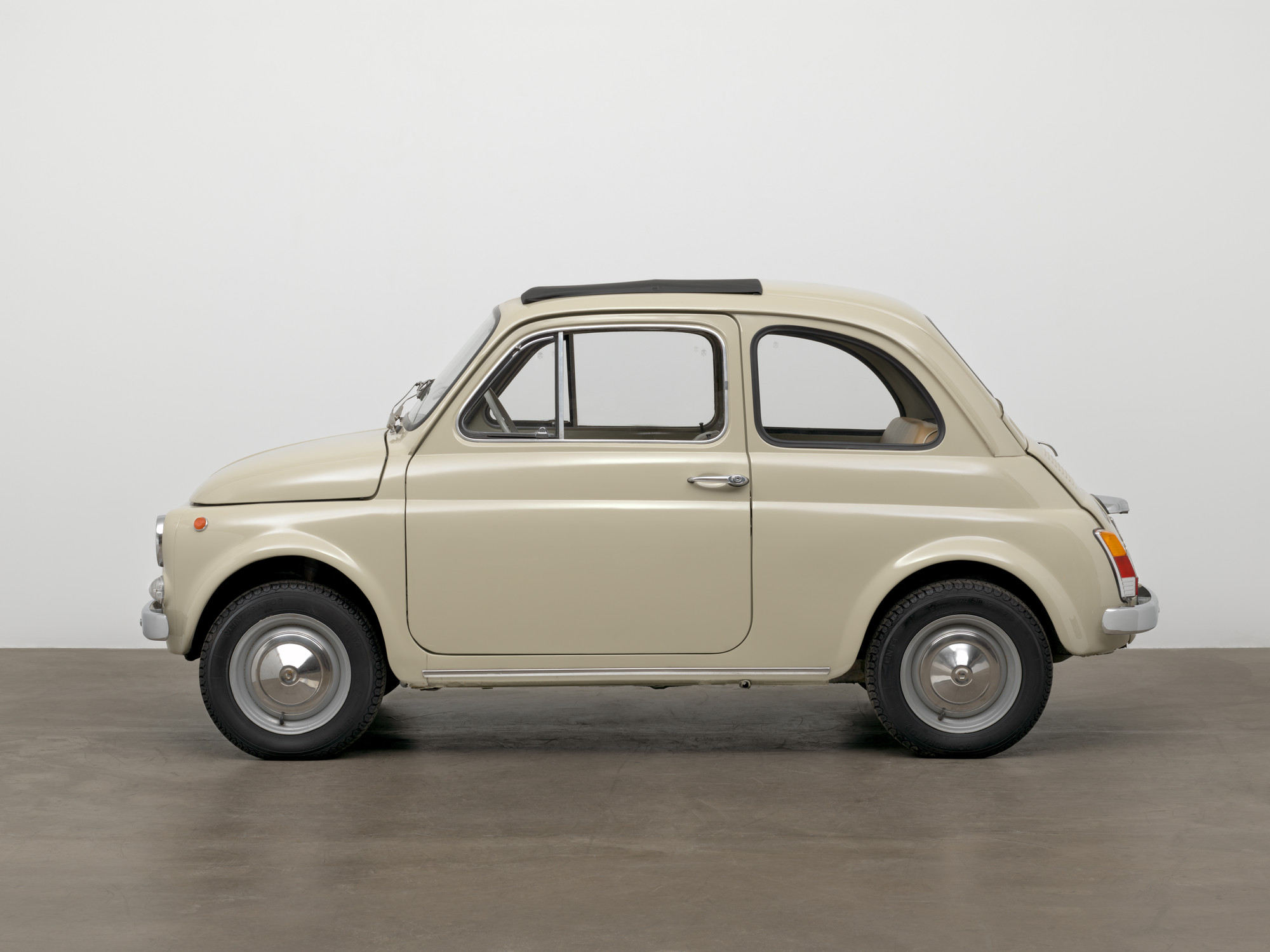
Curator, Paul Galloway: As you approach the Fiat 500, known in Italian as Cinquecento, you'll notice that it's an extremely small car. The engine is mounted in the rear. It's a very modest unit that puts out a whopping 13 horsepower, that's roughly the same as a lawnmower, so it's a slow car.
It was also one of the very first purposely designed city cars. You can navigate very tight streets. It can park in very small parking spaces. It uses very little gasoline. It comes out at the same moment, in the 1950s, that in other places like in the United States, you have these gigantic gas-guzzling behemoths from Cadillac and Ford. And then in Italy you have this minuscule, magnificent, little masterpiece of a car.
Italy in the 1950s, was like many countries in Western Europe, still emerging from the chaos and destruction of World War II. When the 500 came out, Fiat was very specifically thinking of first-time car buyers. Fiat stripped everything unnecessary from the car, anything that would have added cost to the vehicle was removed. The one you're looking at doesn't even have a gas meter. It's got a canvas fabric roof because they were trying to save on steel.
So the car, while being very cheaply made, was not poorly made. And that's the amazing achievement of the Cinquecento is that if you look at the car body, it's got cute rounded corners, nothing is clumsy looking, everything is proportioned just so. On the inside, it looks very stripped down and very simple and that's partly to make as much interior volume as possible.
And so it was, in every way, designed to be the cheapest, most accessible car possible. And this was an exact fit for the market at that moment and remained in production for 18 years.