Curator, Juliet Kinchin: My name is Juliet Kinchin. I'm a former Curator in the Department of Architecture and Design at MoMA.
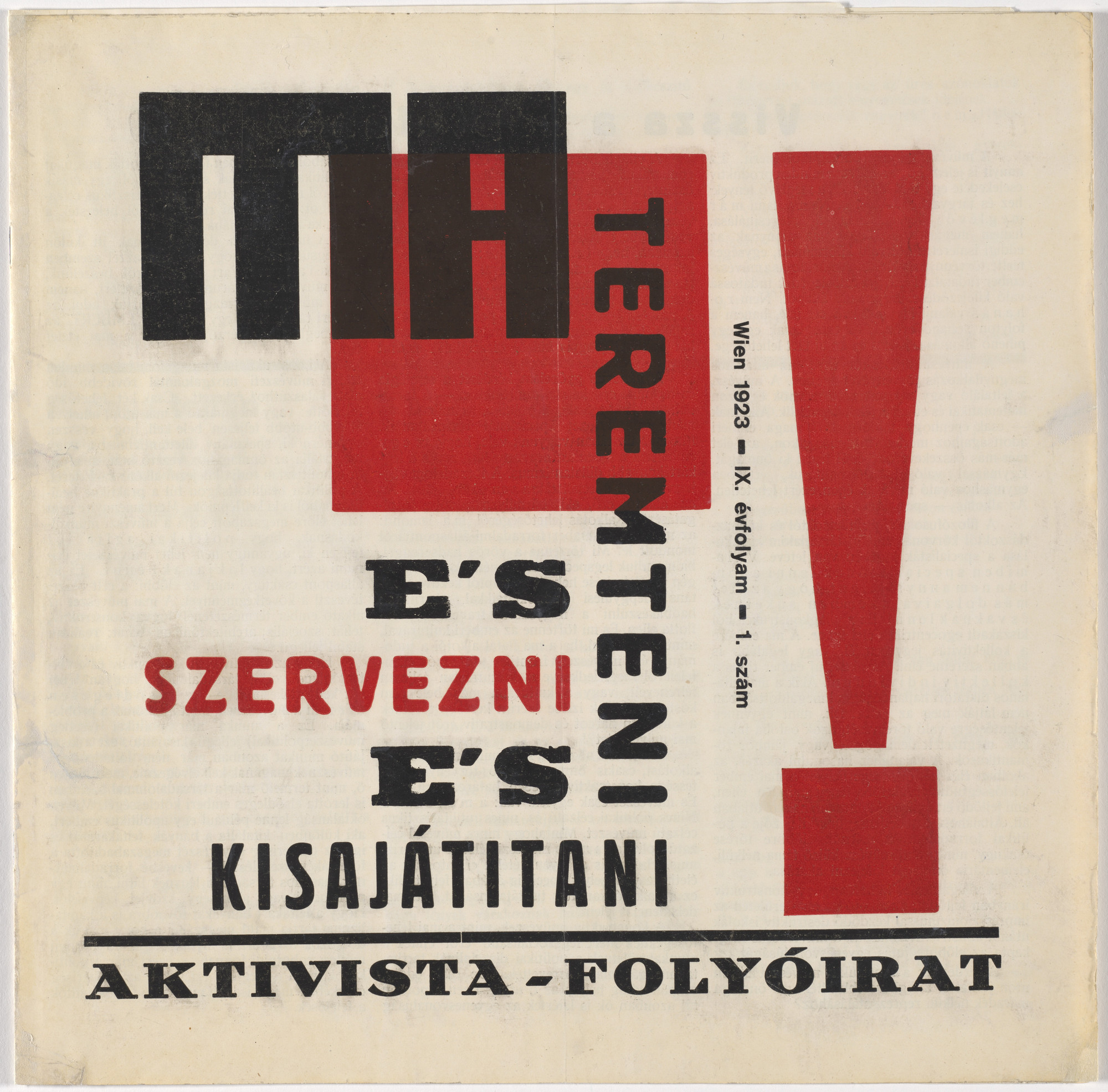
MA magazine was a Hungarian magazine initially published out of Budapest in Hungary. The title MA means “today” but also can be taken to stand for “Magyar Aktivizmus,” Hungarian activism.
It was started during World War I. And Hungary, at that moment, was really at the very epicenter of the turbulence, as the Austro-Hungarian Empire was crashing apart around this group of artists, architects, and designers in the MA group. Many of this group were involved in the short-lived Bolshevik revolution of 1919, which was quickly followed by vicious reprisals. Many of them had to flee Budapest, and the publication of the magazine moved to Vienna.
You can see the shifting graphic identity of the MA magazine covers. When you look at the cover designed by MA's founder, Lajos Kassák, he's changed the format of the magazine to a square and has introduced these very architectonic letterforms, the M and the A have an architectural presence, like building blocks.
Curator, Jodi Hauptman: Farkas Monar's 1924 cover design for ma also features architectural letter forms.
Juliet Kinchin: 1924 was the year that Lenin died and hundreds of thousands of people filed past his body in the Red Square. So, in a sense, this red square almost becomes like a muster ground for this new collectivist society to which the MA group were looking forward.