Artist, Nina Katchadourian: Generally, dust is bad for artworks because it’s hygroscopic, which means that it absorbs moisture from the air, and for some artworks, that can be very damaging. I learned a lot about the techniques used to clean paintings from Anny Aviram, who has been a conservator at MoMA for over forty years.
I heard about a cleaning substance called “artificial saliva” which I asked Anny to explain to me. It turns out that the painting you’re standing in front of, called Vase of Flowers by Pablo Picasso, was cleaned in a rather surprising way.
Conservator, Anny Aviram: Basically, 90% of saliva that we have is water. The other— the other percentage is some enzyme buffering agents and some minerals. We clean paintings at times with saliva. We call it an enzymatic solution. It’s very difficult to talk about cleaning things with saliva. People, it’s— it’s— it’s a funny connotation.
Nina Katchadourian: So how do you do it, and what tools do you use, I asked her.
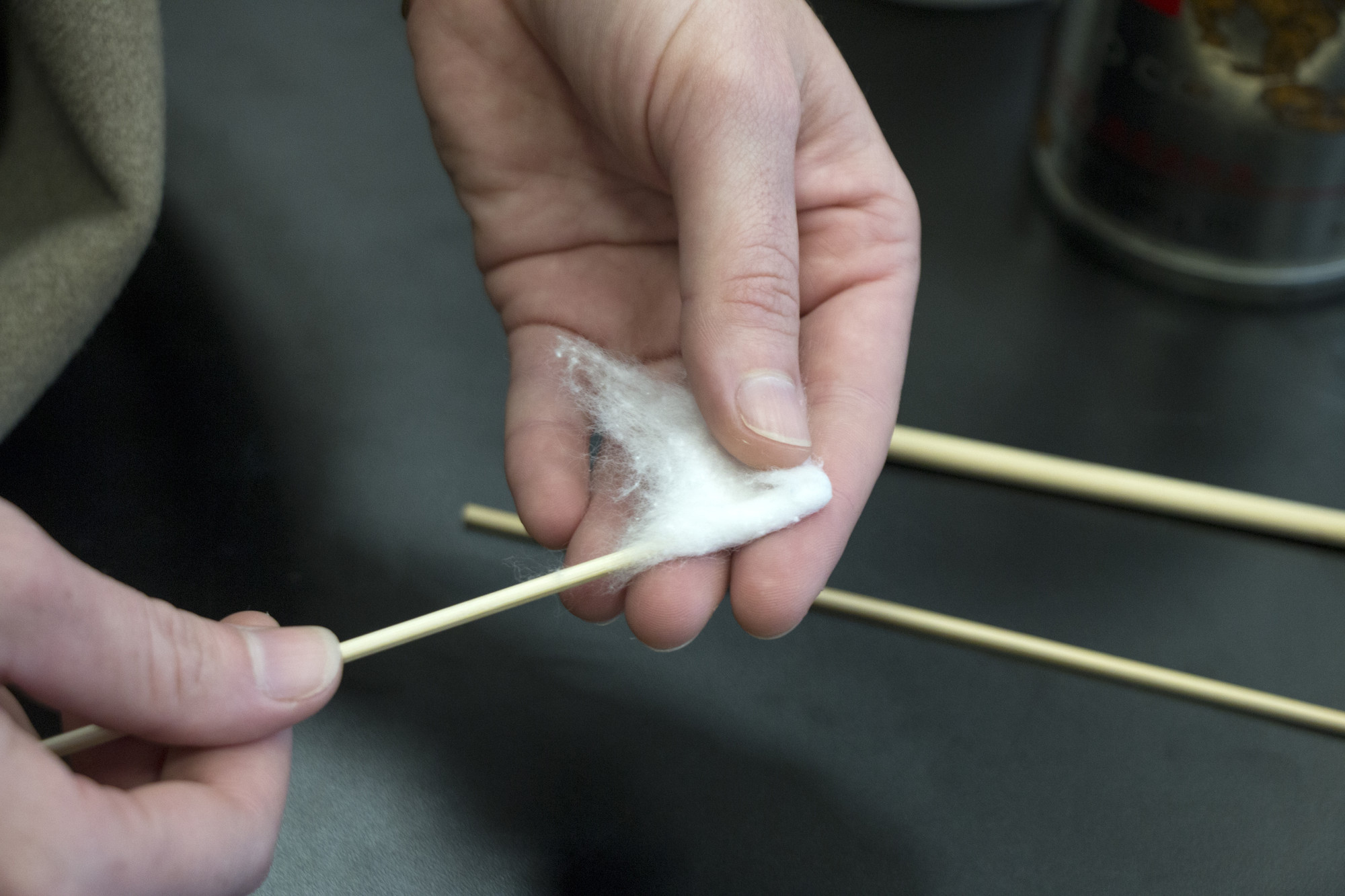
Anny Aviram: With a cotton swab, which you roll yourself. And then you follow up with a dry one, to make sure you remove whatever moisture is left on the surface.
Nina Katchadourian: And then, with your custom-rolled swabs, you go over every square inch of the painting, a little bit at a time. I asked her which paintings at MoMA she had restored this way, and she mentioned several paintings by Picasso. Doesn’t this painstaking method get very exhausting? I asked.
Anny Aviram: You’re not cleaning eight hours, because you exhaust your saliva after a while and your saliva changes during the day, depending what you ate, depend— depends on many things.
Nina Katchadourian: I suddenly realized that she was not talking about artificial saliva, but her own. Anny cleaned Vase of Flowers, the painting in front of you, with great care, expertise, and commitment, using her own saliva. In fact, she has cleaned Picassos three times this size with her own saliva, a laborious process that can take months. I haven’t looked at a Picasso the same way since.
“That’s so intimate,” I said, “how did you do it?”
Anny Aviram: I was putting the swab in my mouth, swabbing it in my mouth, and then at the painting. Fresh.