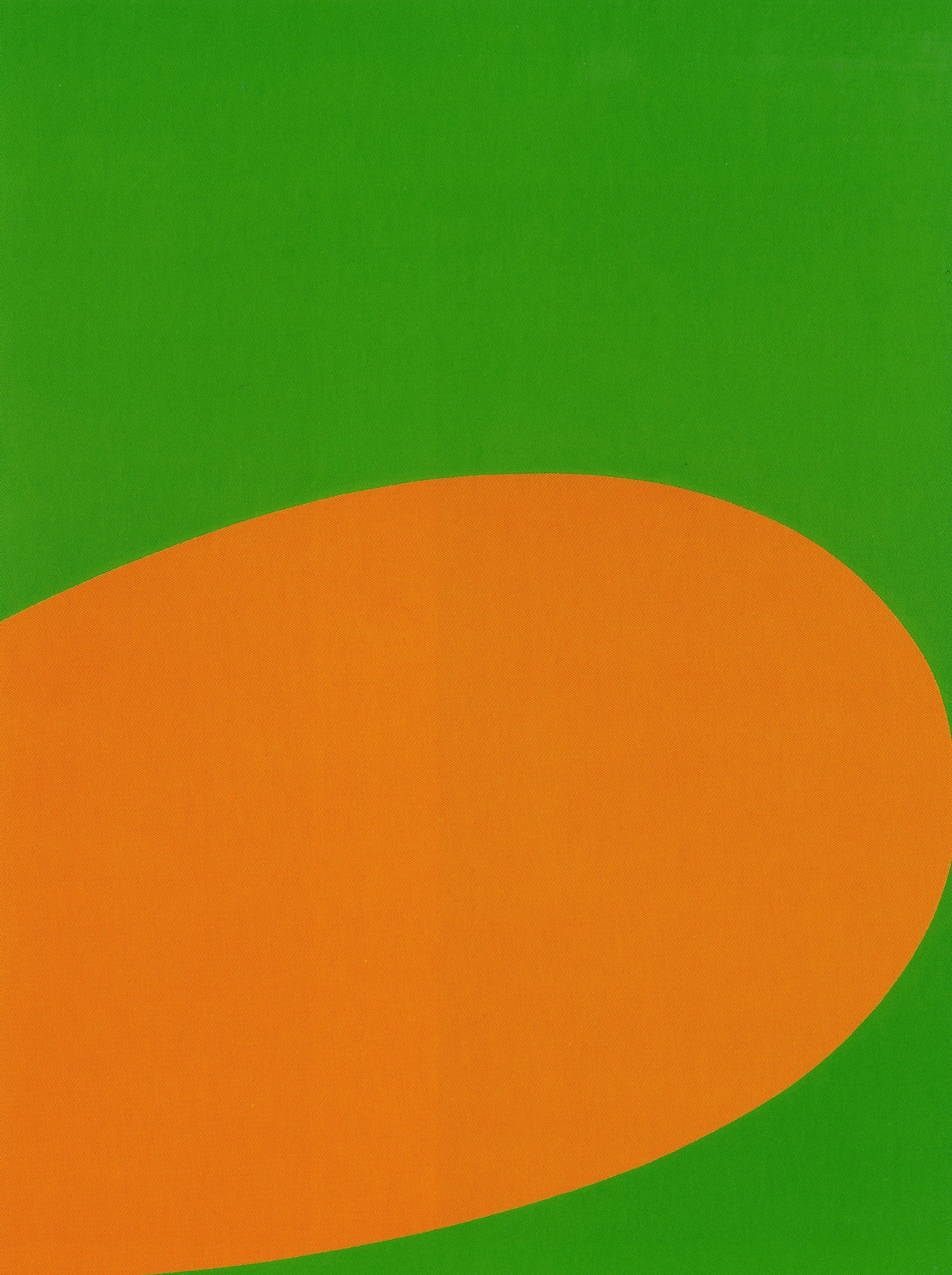
Curator, Smooth Nzewi: My name is Smooth Nzewi. I'm the Steven and Lisa Tananbaum Curator in the Painting and Sculpture Department. This gallery is focusing on hard-edge abstraction from the 1960s through the ‘70s.
The term really implies what you see when you're looking at the work: these crisp edges where one color stops and the other one begins, rhythmic patterns, flat colors, monochromatic, geometric. If you pull back and look at the bigger picture, it was part of a broader shift happening in the art world.
Artists were thinking about painting in other ways, and Ellsworth Kelly was really helping to move the conversation away from the more emotive, gestural strokes, to the more controlled style we call “hard-edged.”
He worked with single colors, and he did not paint straight from the tube—meaning that they're actually very layered before they're applied on the surface of a canvas, and hence, you have this very smooth finish.
Artist, Ellsworth Kelly: All my colors are mixed in depth in order to paint. I put white in the colors. I want to get it as quiet as possible because I didn't want your eye to concentrate on the surface. With my pictures, I felt like I'm using space between the picture and the viewer to concentrate on, so I don't want marks. It's a big mark. It's a whole.
Smooth Nzewi: People criticize hard-edge painting for being very simple, almost impenetrable, and he would respond by saying that, for him, it's really about the pure experience of looking. He thought of his painting as being between the viewer and the work as a silent encounter—no storytelling, no complex magic to unpack, just an encounter with you, the color, the shape.