Artist, Christo: My first name is Christo. I start to study art at an age of six.
Narrator: That's the Bulgarian-American artist Christo Vladimirov Javacheff, professionally known as Christo.
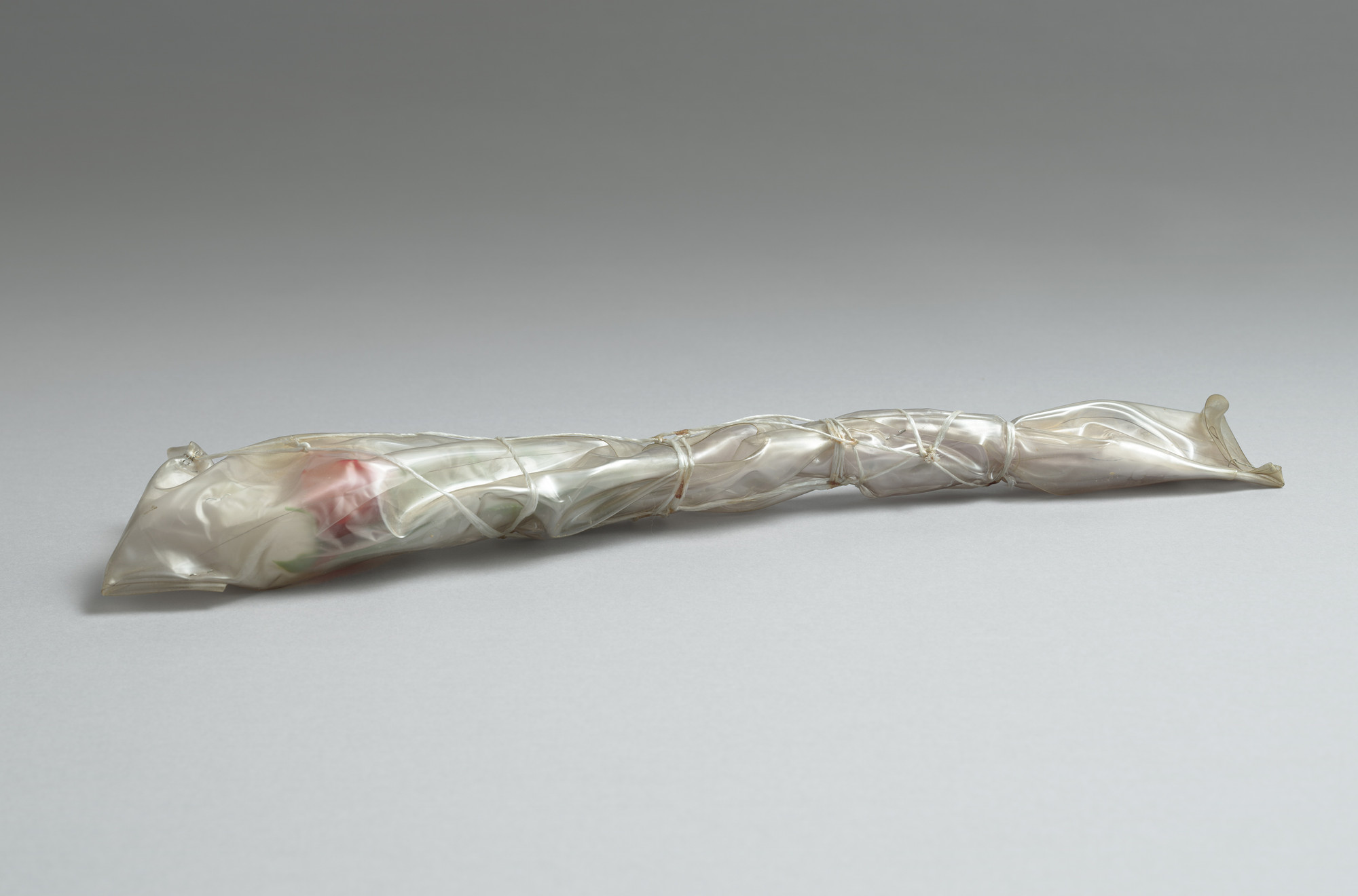
As an art student, Christo worked on movie sets and became interested in the way objects took up space. Later, he began making sculpture by rummaging around for everyday objects and furniture. Then he wrapped them in fabric or plastic. His aim was not to conceal the objects but to look at them differently.
Christo: The wrapping was to mostly manipulate objects, three-dimensional things. And of course, the wrapping was showing that, but all the object who was wrapped was very recognizable. My work is very literal. This title of the work was exactly the object who is there.
Narrator: Christo made this work several years after he fled Eastern Europe.
Christo: I live in Bulgaria and Czechoslovakia. It was a terrible time. Western art was all prohibited. I grow, and my interest became more and more individualistic. When I escaped, my only thing was to come to the West to see anything possible, and it was very important for my work to make my own judgment.
Narrator: Later in his career, Christo worked in partnership with his wife, Jeanne-Claude, to create monumental installations—wrapping everything from buildings and bridges to landscapes.
Archival audio from: Oral history interview with Christo, 1973 August 28-30. Archives of American Art, Smithsonian Institution.