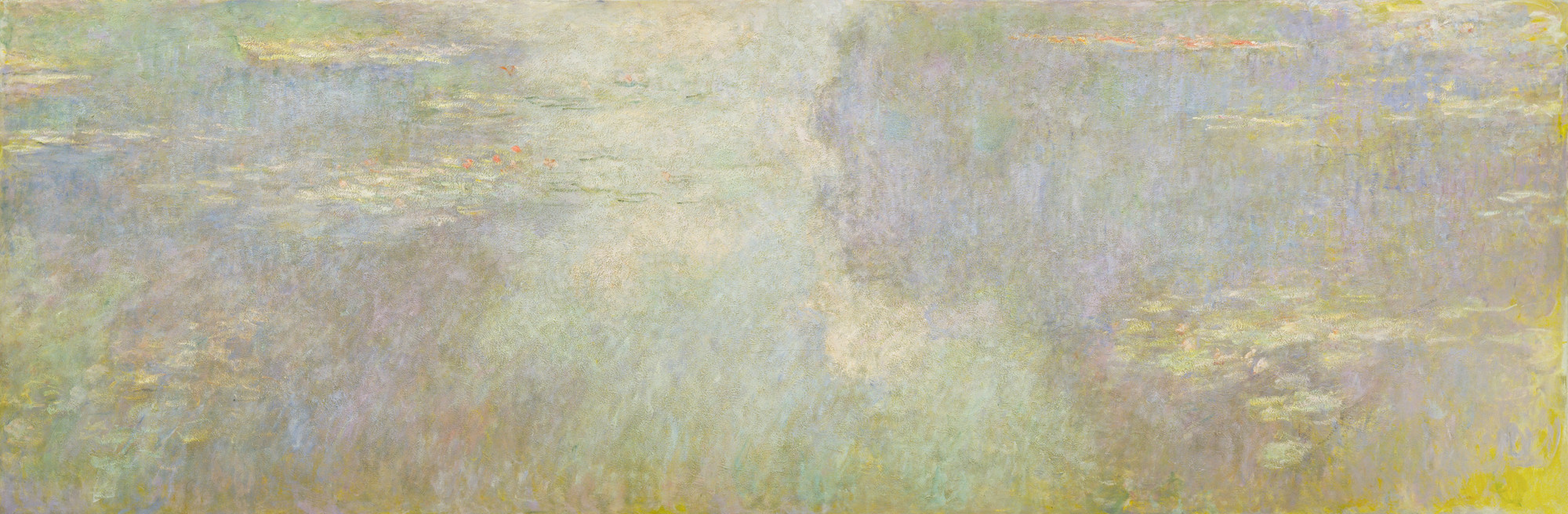
Christopher Bailey: Hi, this is Christopher Bailey, Arts and Health Lead of the World Health Organization, I also happen to be functionally blind with less than 5% of normal vision. You might reasonably ask, what would a blind person have to say about an artwork? Did it cure my blindness? No, it didn't. But, in some ways, it might've helped me heal.
My relationship with the painting comes from my father. He was an art conservator and a painter himself. When he took me to museums as a child, it was a rare chance to be with my father in his workplace. What was really interesting was the construction of the painting itself. How two distinct blobs of paint could combine to create a different color, a different effect.
I lost my sight a number of years ago and had been avoiding MoMA and the Water Lilies, in particular, precisely because it meant so much to me when I was young. And yet, to my astonishment, looking at the Water Lilies through the gauze of glaucoma, my first feeling was that Monet was actually painting the way I see now.
My eyesight registered some of the colors and patches here and there. My intimate memory of the painting began to fill in some of the gaps. And somehow the interplay between brushstroke, emotion, memory, and the imagination created the Water Lilies in my mind. Surface, depth, and reflection converge, just as past, future, and the present moment become one.
For the first time, I could imagine that the way I see the world could be conceived of as beautiful. And I've realized I've lost nothing. I feel no anxiety or dread. I simply luxuriate in the joy of color and celebrate this present moment. This to me is the healing power of art.