Curator, Anne Umland: I’m Anne Umland. I'm Senior Curator in the Department of Painting and Sculpture here at MoMA.
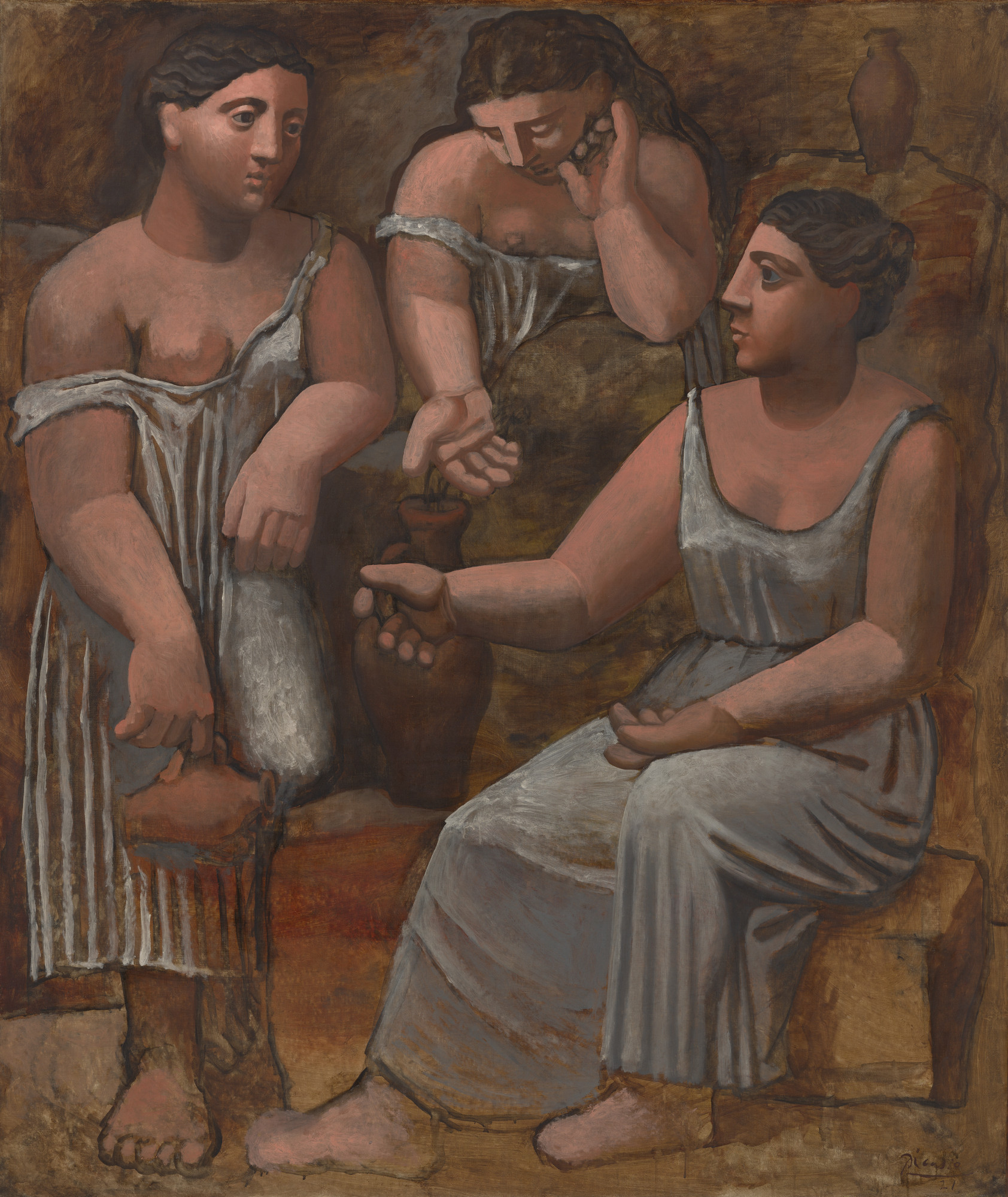
Three Women at the Spring was made in a very unconventional studio in a garage in the town of Fontainebleau in France in the summer of 1921. And in the gardens that were just walking distance from his house, there is this very minor town landmark called the Napoleon Fountain that had a rocky backdrop and that is loosely reminiscent of the spring in this picture.
At its very center, you get this exquisitely choreographed play of hands that circle around the open mouth of the amphora. Below the woman's outstretched hand, there are a few black lines as though to indicate water pouring down into the open mouth of the amphora. But on the top of the hand where you would expect to find water, there's no trace of it. I think that really heightens the mystery of the work.
Picasso made many variations on the theme of three women at the spring over the course of the summer, but the features common to each are the three women, and these simple tunics that might remind you of ancient Greek or Roman sculptures.
He was a classically trained artist. But I think Picasso himself would say that he didn't see a big difference between his Cubist style and this more classical figurative style. For him, they were different manners of expression and the thing that matters most of all is that the artist has a freedom to choose.