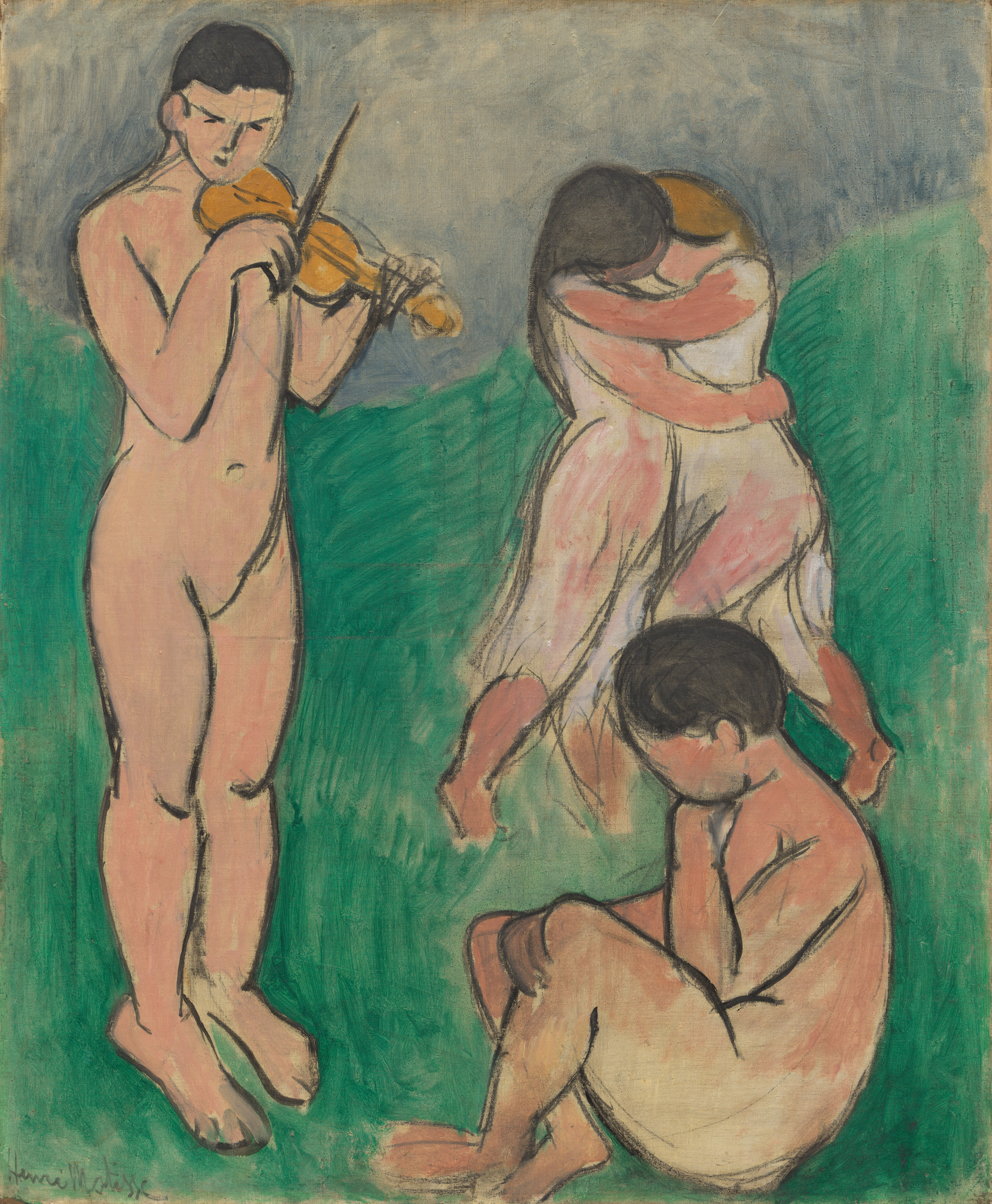
Curator, Ann Temkin: At the time that Matisse was making works like Music and Dance he had his few very fervent supporters and defenders, but for the most part the public completely ridiculed what he was doing.
I'm Ann Temkin and I'm the Chief Curator of Painting and Sculpture here at MoMA.
In 1906, Moscow textile magnate, Sergei Shchukin, met Matisse, visited him in his studio, decided he would become an avid collector of his work. It was he who commissioned Dance and Music for his mansion in Moscow.
These works in MoMA's collection were made as a kind of study for the two murals. And there was a real challenge to their relationship when Dance and Music arrived in Moscow at the end of 1910. They shocked Schukin as they had the audiences in Paris and other people in Moscow.
This painting was done at a time when in the European academy, more important than portraits, more important than still lifes were these paintings that depicted mythology or real history. You can picture these classical representations of bodies with beautiful flesh and marvelous hair.
In the early 20th century, a lot of Matisse's viewers were still looking for those things. And what they saw instead were these figures that seemed to them almost like caricatures or something children would draw. They didn't have anything to do with high art, as far as the viewers were concerned.
But instead of letting that discourage him, Matisse went right for these subjects like music and dance that tapped into these centuries of European painting depicting the female nude.