Curator, Barry Bergdoll: In 1945, the French government commissioned Le Corbusier to design a residential building in Marseille, close to the Mediterranean. He envisioned it as a model of modern, clean living.
Architect, Jean-Louis Cohen: The Unité d'Habitation is a sort of manifesto. The idea is here that in order to reshape modern cities, people should live together, that this would save very precious ground and utilities. And at the same time, that by opening the building to the sky with its roof terrace, by giving very generous balconies to each apartment, a lifestyle opened to the outdoors could be achieved in a collective building.
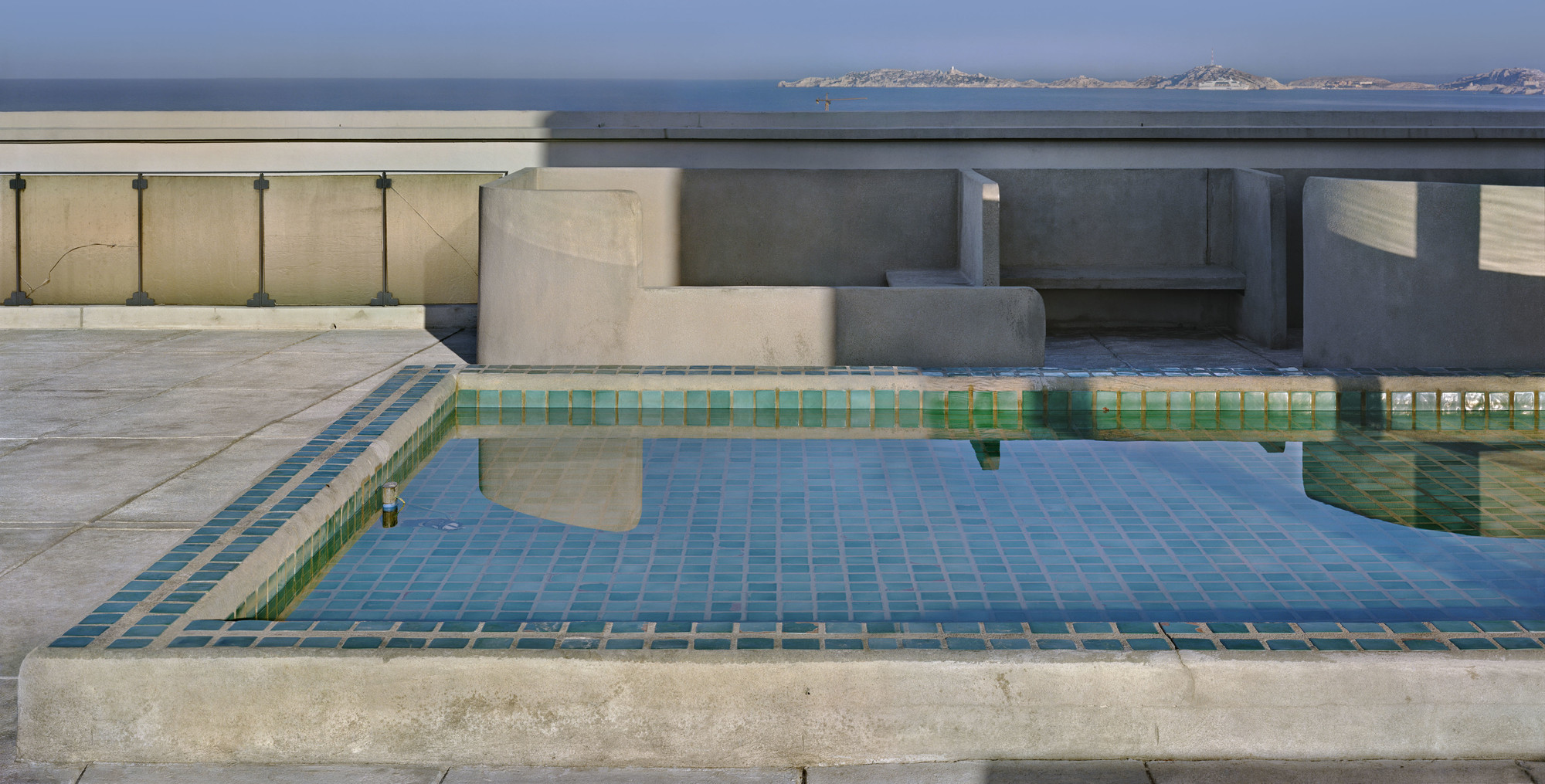
It's clear that Le Corbusier, who was very fond of ocean liners, had this in his mind when he conceived the super-structures of the building. From the façade on the west side, one sees the sea and the islands in the Bay of Marseille.
Barry Bergdoll: With sleekly designed, light-filled, two-story apartments, Le Corbusier hoped to re-invent urban living. As you’ll see in the nearby photographs, he arranged the amenities on the rooftop like a landscape, including a wading pool, running track and elementary school. They were all designed to foster community.
Jean-Louis Cohen: The idea Le Corbusier had about living in the Unité was the notion that a new life would be possible that the new inhabitants would find a rather harmonious way of communicating with the outdoors, and of sharing open and playful spaces. So the Unité is a very significant milestone, not only in the work of Le Corbusier, but in the development of 20th century housing worldwide. And it will be copied in many ways by dozens of architects.