Director, Glenn Lowry: I'm Glenn Lowry, Director of The Museum of Modern Art. I'm pleased to welcome you to German Expressionism: The Graphic Impulse.
Expressionism was a broad artistic movement that took root in Germany and Austria in the first two decades of the 20th century.
Curator, Starr Figura: The Expressionists were reacting against a traditional kind of academic art that was pervasive in society. And they also wanted to overturn very stiff bourgeois social mores about how to live your life, about sexuality, about relationships between men and women.
Glenn Lowry: That’s Starr Figura, Associate Curator of the Department of Prints and Illustrated Books. She’ll be your guide on this tour.
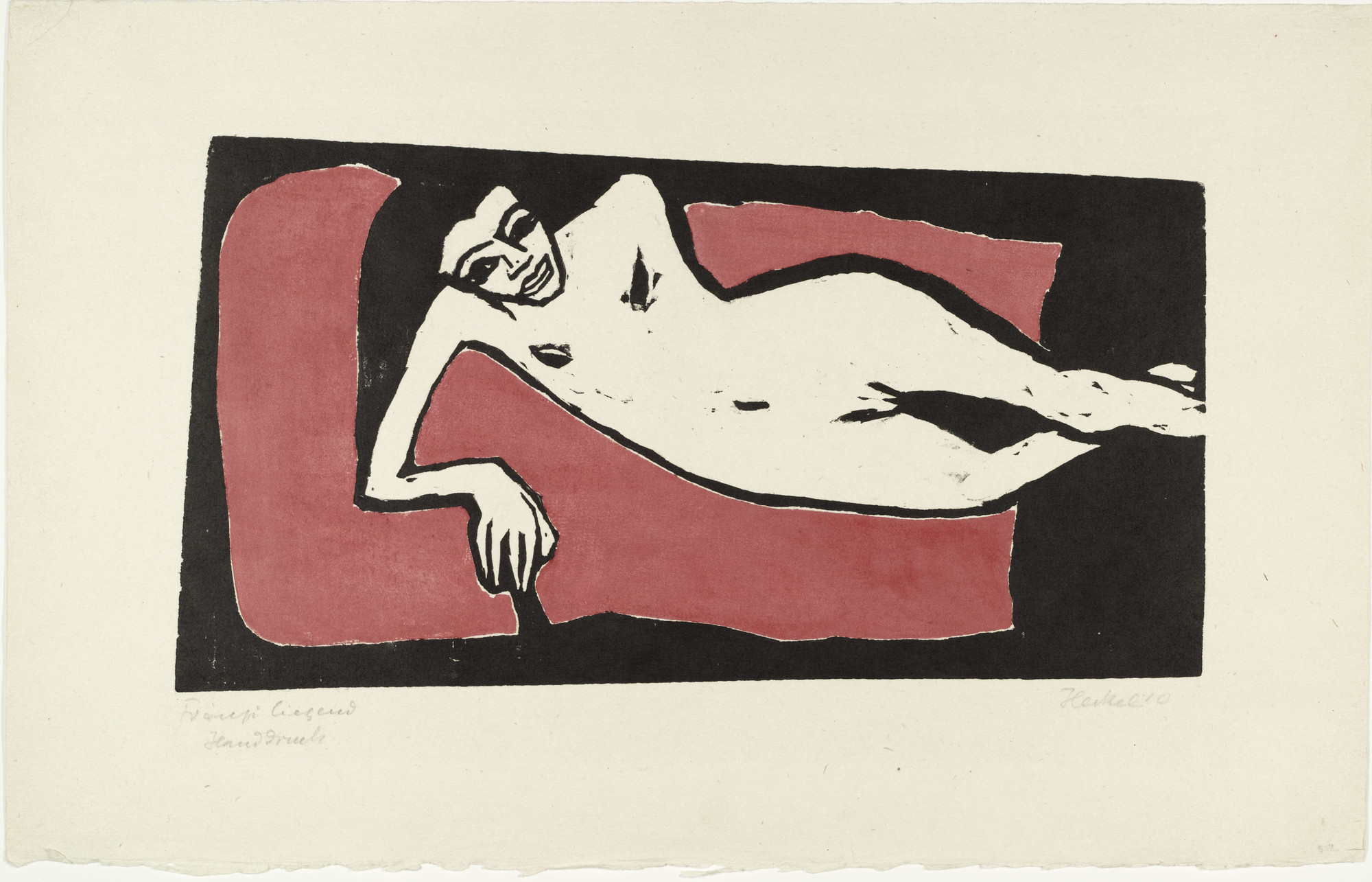
Starr Figura: One of the really distinctive things about Expressionism was the degree to which the artists embraced works on paper, particularly printmaking, but also drawings. Printmaking helped them define their modernist aesthetic, which involved a radical simplification and flattening of forms. It also enabled them to disseminate their images more widely, and thus make their cause more broadly known.
And finally, Expressionism developed within a period of intense social and political transformation in Germany and Austria. And printmaking proved to be particularly useful as a way of promoting or in some cases, criticizing certain aspects of government or politics.
Glenn Lowry: Throughout the tour, you’ll hear the music of Arnold Schoenberg, Anton von Webern and Alban Berg, who were active during this era. The musical excerpts are from The Blue Rider in Performance, a co-production of Da Camera of Houston, Works & Process at the Guggenheim, and Miller Theater of Columbia University, which was conceived and directed by Sarah Rothenberg. Performers are Susan Narucki, soprano and Sarah Rothenberg, piano.
For detailed instructions on using this Acoustiguide, press 1-0-1 and the ‘play’ button at any time.