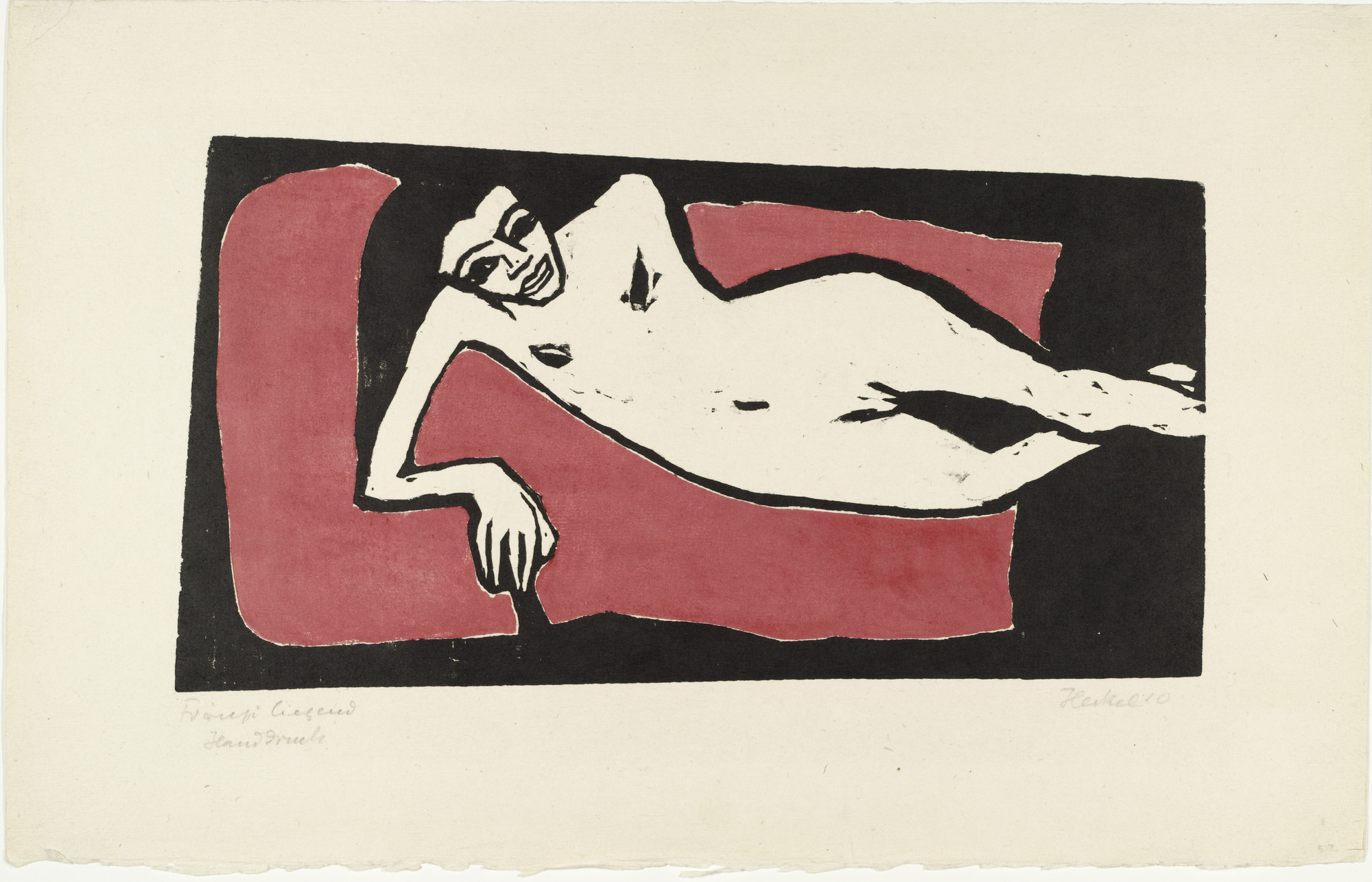
Director, Glenn Lowry: This is Fränzi Reclining by Erich Heckel, one of the four students who founded the Brücke artist group in 1905. Brücke means "bridge" in German; they picked the name to suggest their art would be a bridge to the future.
Heckel’s portrait is a woodcut print, a favorite medium of the Expressionists. Curator Starr Figura:
Curator, Starr Figura: It had a very rough aesthetic, which was the opposite of the refined painting that was going on in the academies. It brings this jarring, almost primitive look to the work. And that's what they wanted.
In this particular work the model is a young girl named Fränzi, who was one of several young people who would hang around with the Brücke artists in their studios. They couldn't afford professional models. But they didn't want professional models. They wanted regular people who would assume very natural poses. Fränzi was one of their favorites. And you can see the way she's reclining is slightly awkward. The other thing about Fränzi is her face which looks like a sort of African mask. And in fact, the Brücke artists were very influenced by African and Oceanic tribal art, which they saw in the Dresden Ethnographic Museum where they lived.
Glenn Lowry: The founders of the Brücke were not actually trained as artists. To hear more, press 6010.