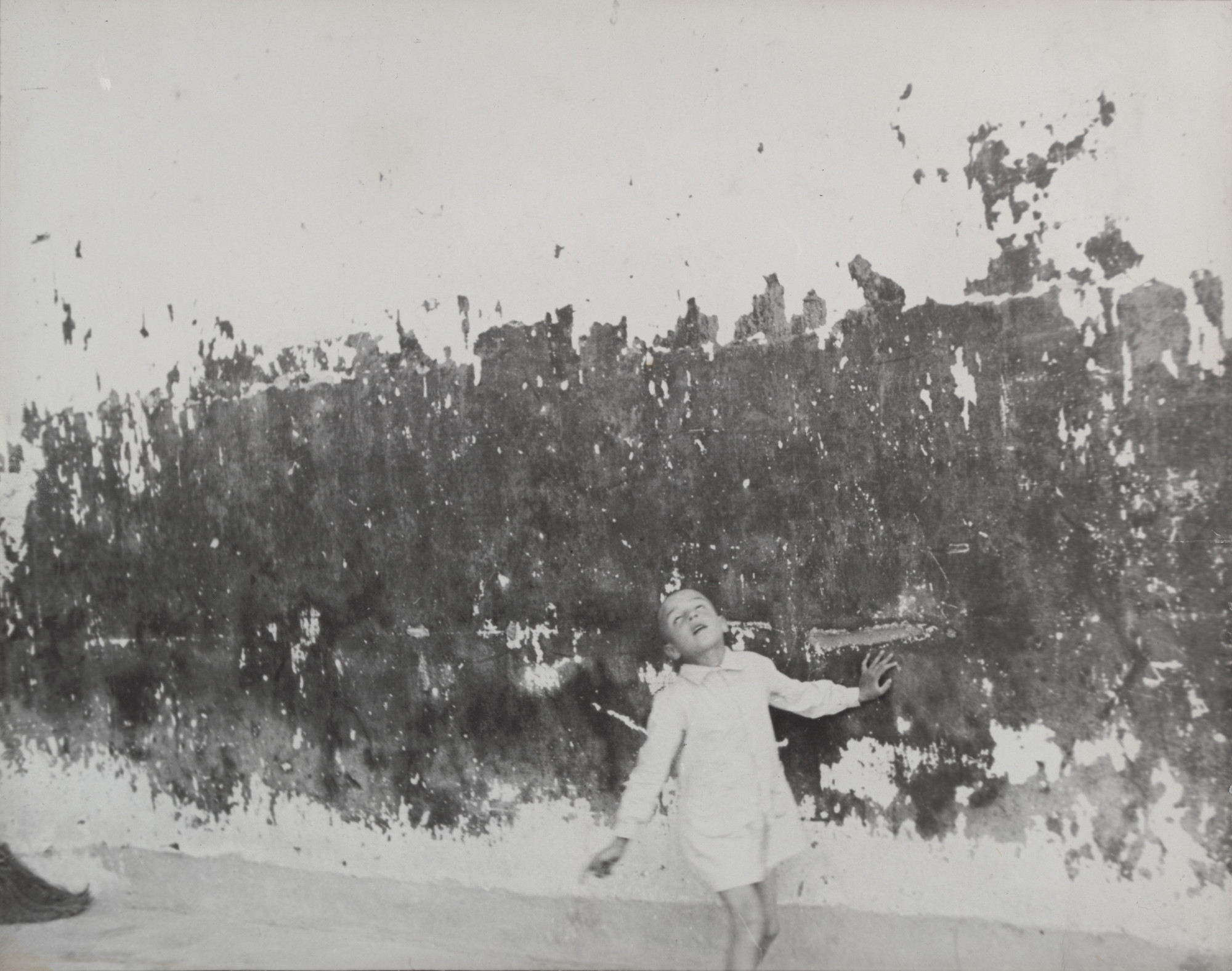
Curator, Peter Galassi: Even for the very best photographers, most exposures are failures. You see a possibility, you take the picture, and then you decide later whether it's any good. And we're all familiar with this. That most photographs don't turn out the way we expected them to. And the reason for that is that photography always changes what it describes. Part of what makes Cartier-Bresson's work of the early '30s so original and so compelling was not only that he mastered this transformation of the subject [into] the picture, but he pushed the transformation as far as it can be pushed. And this picture is a very great example of that.
In this picture, called Valencia, Spain, 1933 what was really there was an old neighborhood with a scruffy wall. And a little boy who was playing ball. And he's thrown the ball up in the air, and it's outside of the frame, so we don't see it. His eyes are looking up to track the flight of the ball. And just by the absence of the ball, he gets transformed into a figure of rapture. And because he's a figure of rapture that's isolated in the situation, this old messy wall becomes part of the cosmos that he's in the middle of. The very possibility that you could start with such basic raw materials and take them so far into a picture like this, was something that was really discovered at this time.