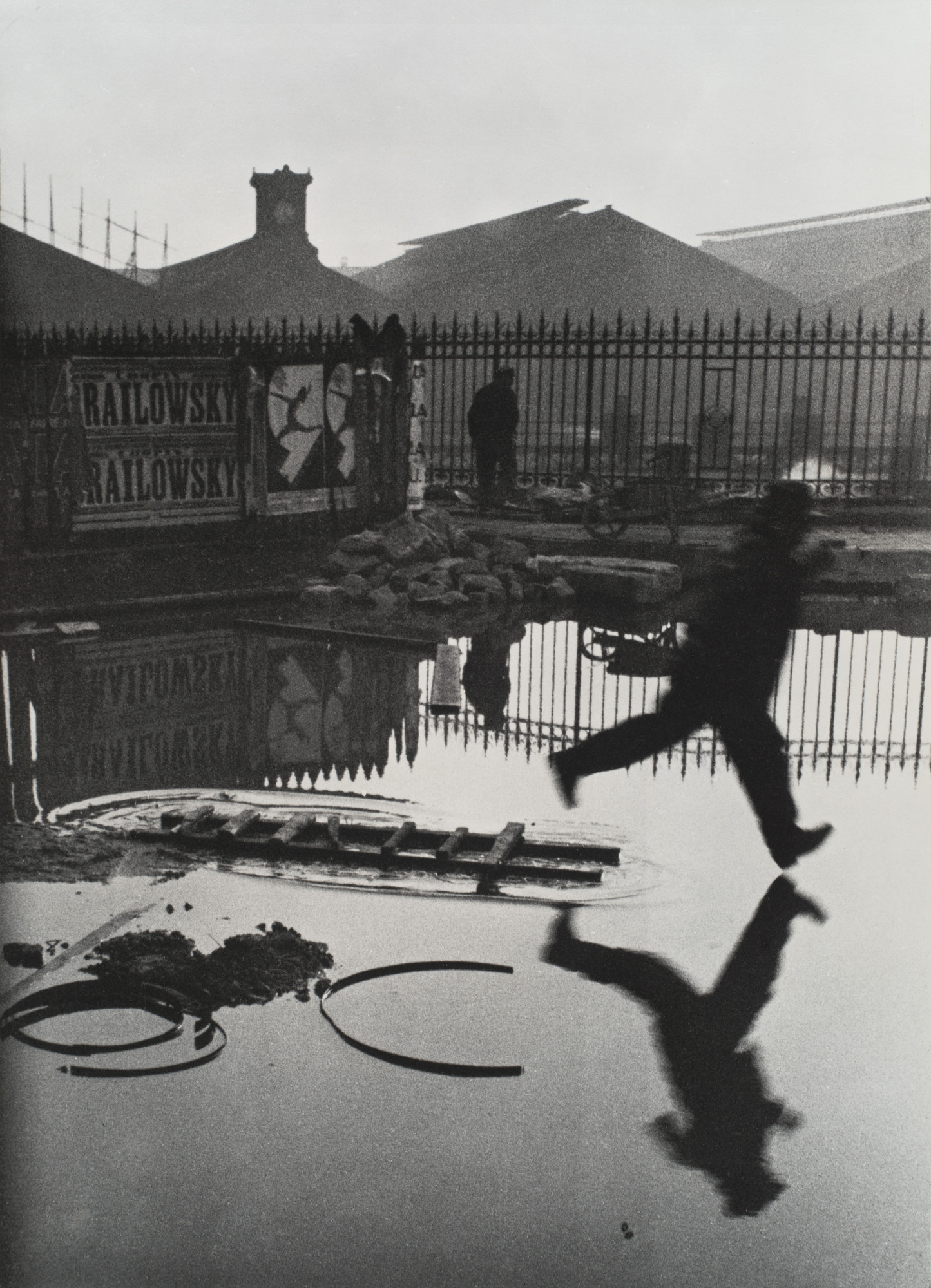
Director, Glenn Lowry: Photography was once a matter of big cameras on tripods and long exposure times. It wasn’t until the 1920s and ‘30s, that artists began experimenting with cameras small enough to hold in your hand and quick enough to freeze motion. These cameras freed photographers to prowl the streets and react to unexpected events—and they gave rise to many wonderful pictures of people caught in the act of jumping or leaping.
Curator, Peter Galassi: I don't think anybody ever made a better one of those pictures than Behind the Gare Saint-Lazare in 1932. The leaping man is caught just at the moment before his heel will touch the water.
The water is so completely still, it acts like a mirror. And the way the picture is framed; you see his entire silhouette, which is clearer in reflection. Then there are these uncanny details, the sort of home made ladder that he's pushed off against has already made its ripples, and then, there are the bands that would go around a wooden barrel, in the shallow water nearby that anticipate the ripples that are going to happen once his heel hits the water.
And then in the background, of all things, is a poster advertising some kind of dance event, with a dancer leaping in more or less the same pose that the man is leaping in.