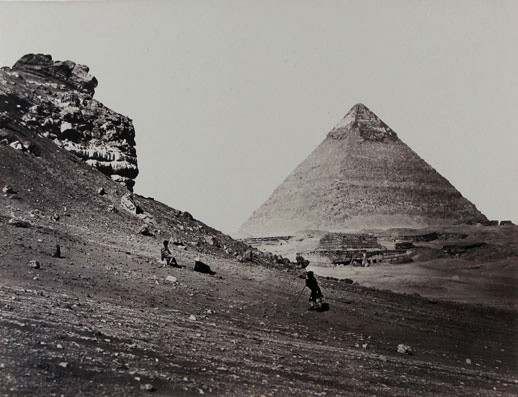
Photographer, Richard Benson: Photography was a revolution, and we should be very clear about the nature of this upheaval. What was radical about photography was that the gathering of pictorial information was freed from the human hand. Anyone with modest training could now make a picture, but even more extraordinary was the fact the the pictures derived from the world in a mechanical way; the light that strikes our eyes and tells us what is out there was now harnessed to produce frozen pictures, which seem to provide evidence of what the world looks like freed from the inevitable interpretations of the artist. These new pictures were inexpensive and easy to make, and paper photography rapidly produced far more pictures than had ever existed before. Visual information now could travel through society at high speed, with great accuracy, and our modern world is inconceivable without this structural backdrop.
The giant of paper photography in the nineteenth century was the albumen print. When coupled with a wet plate glass negative, the semigloss albumen print generated sharp and tonally complex pictures that killed the daguerreotype outright. Paper had won the war. The albumen print used a silver salt suspended in egg albumen, and the image was given great stability by being toned with gold. The toned silver image was reddish purple, and so nineteenth century photography has that unmistakable color cast. Photographers were rankled by the color of their prints, and so a set of alternate processes were invented that gave the images different colors. The albumen process, however, led to far more prints than all the other processes combined.