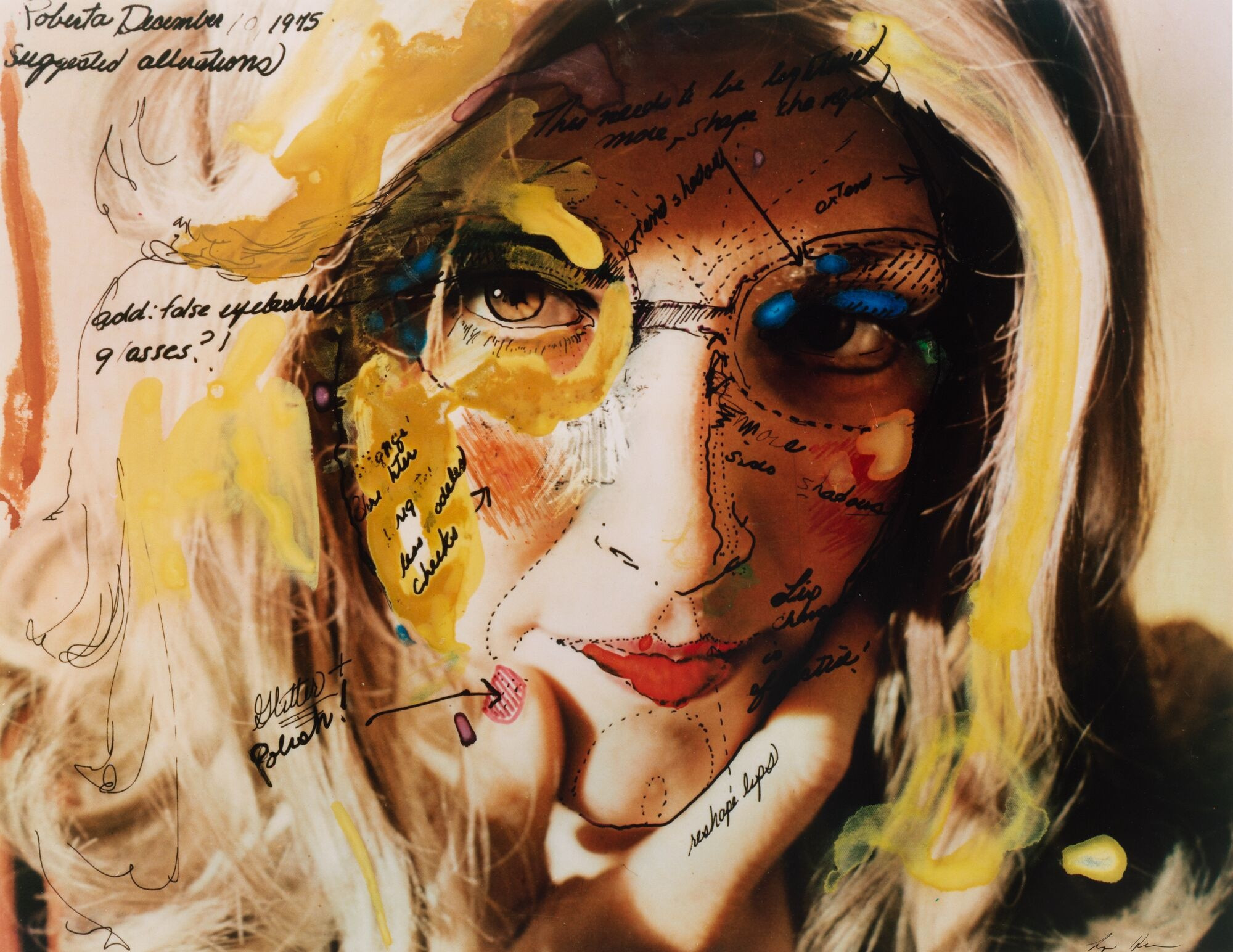
Artist, Lynn Hershman Leeson: In the early ‘70s, I wanted to define what it was like to be a woman at that time, which is how I made a decade-long project called Roberta Breitmore.
My name is Lynn Lester Hershman Leeson.
I wanted to embody the physical aspirations for beauty, so I sought out magazine images and instructions on how to look attractive. I photographed Roberta and saw alterations that could make her truer to what I had hoped that she would look like, and so I drew that right on top of the photograph and that’s what you’re seeing. These were really just a guide for me in putting her together. It tells what kind of makeup to use, what brand of lipstick, what kind of cheek gloss, what kind of eyelashes, what kind of glasses, and so forth.
When I performed Roberta, I recorded her adventures. She put out ads in the actual newspapers for roommates, and she would go to the meetings—they would be documented through film and audio tape that was in my purse. Roberta had a lot of difficulty in her life, she couldn’t maintain friendships. She couldn’t keep a job. She went to see a psychiatrist, although she couldn’t pay for one, so the meetings didn’t last long. Roberta had her own handwriting and she kept diaries. And it turned out that Roberta was more real in the culture than I was, because she could get credit cards and I couldn’t.
I think whenever you change a form of something, it’s an abstraction. You’re extracting from the many possibilities that exist in the world and using those to communicate. Roberta is really a composite of what people project should be part of their culture but doesn’t exist, and she doesn’t either.