Art HIstorian, Richard Powell: My name is Richard Powell. I’m an art historian at Duke University.
Beauford Delaney was a painter working mid-20th century, both in the United States and in France.
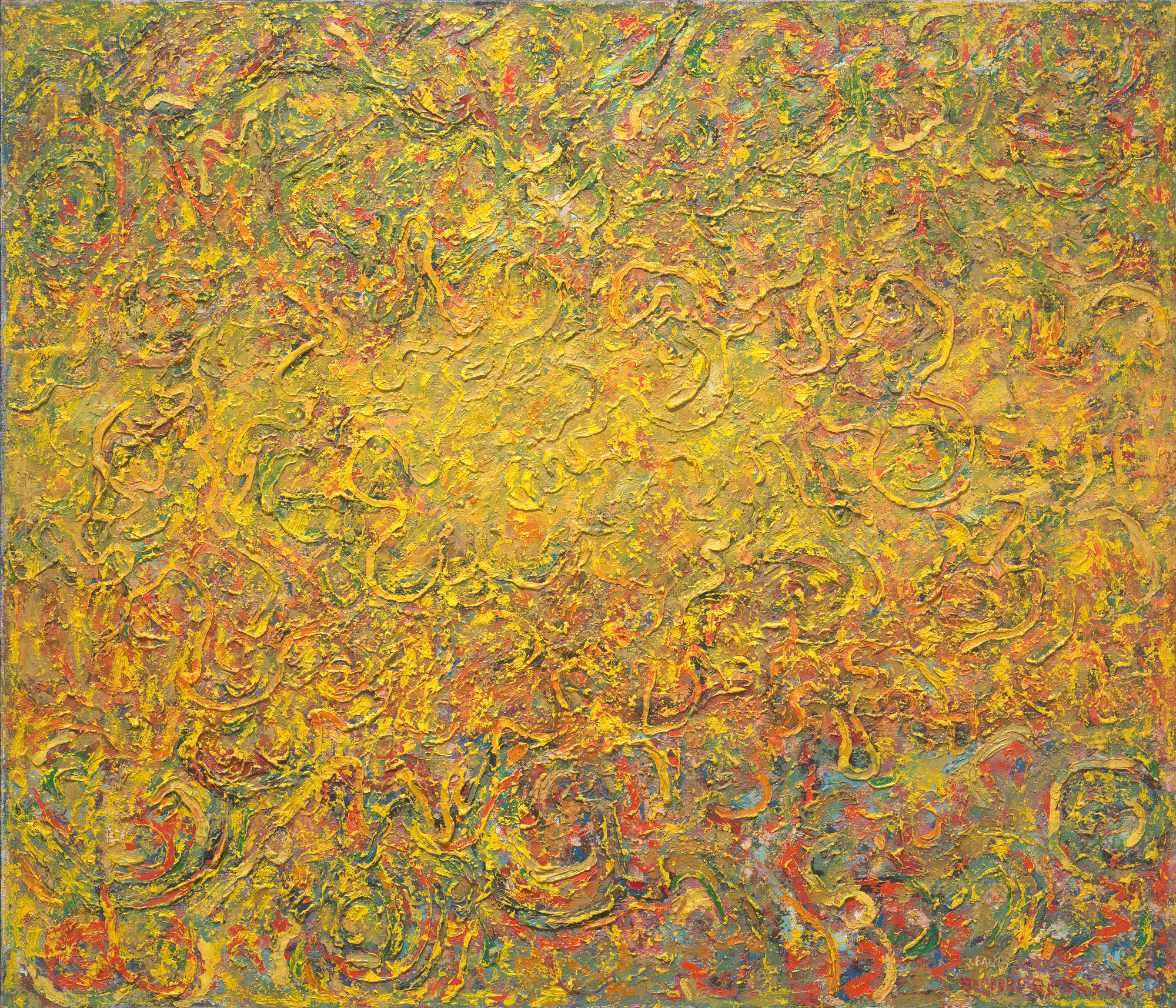
Delaney’s take on abstraction is very tactile. It's almost as if he’s squeezing the paint out of the tubes so that it creates these forms that swirl and move around the entire canvas. There’s an underpainting of green, red, and then yellow begins to creep up and assert itself in ways that gesture towards an idea around energy, around light.
People who met Beauford Delaney comment about the twinkle in his eye, the energy that seemed to encircle him. He was originally from Knoxville, Tennessee and traveled a bit before settling in New York City. But I think that Delaney, as a gay, Black man, realized that France would be more tolerant, and by the early 1950s, he’s living mostly in Paris until his death in the 1970s.
He was very poor, and yet, he was rich and full of life and poetry. For someone who had the life that he had, he would take joy and pleasure and would use yellow in particular as this gateway to something beyond the world that he was walking in day after day, that was his gift to himself.